• How we build
  • How it works
  • Learning & support
How we build
How it works
Learning & support
Locations
Contact us
Try the Home Finder

© 1998-2026 Clayton.

Shop by location

Search by location to find homes, neighborhoods, and home centers

Build for your land

Homes designed for private land and ready for site placement

Shop homes on land

Available move-in ready homes on private lots or in neighborhoods

Try the Home Finder

Homes

  • Shop by location
  • Floor plans
  • Move-in ready
  • Locations

Support

  • Learning & support
  • Homeowner stories
  • Contact us
  • FAQs

About

  • Who we are
  • Our builders
  • Careers
  • Newsroom

Join our newsletter

By entering your email address, you agree to receive marketing emails from Clayton. You may unsubscribe at any time.

© 1998-2026 Clayton.

LegalPrivacySite map
HomeLearning and supportBuying processHow to buy a home: Six steps to homeownership

How to buy a home: Six steps to homeownership

Buying process

By Jenny C.—May 15, 2026—11 min read

A family sits in white rocking chairs on a home's front open porch with a young woman in a brown blazer petting an orange and white dog beside her while an older woman holds a grade-school-aged boy wearing a plaid flannel jacket.

Learn the steps to buying a home, from planning to move-in. Whether you’re a first-time buyer or an experienced homeowner looking for a refresh, this guide offers a simple breakdown of the home buying process.

Buying a new home is a huge accomplishment, and it's exciting to imagine your life after homeownership. But before you break out the champagne and housewarming invitations, there are a few steps you’ll need to take first. 

Whether this is your first time buying or your first time in a long time, purchasing a new home isn’t accomplished in one big leap. The full process is made up of smaller steps over time that come together to achieve homeownership. 

The good news is, this guide will walk you through each step, from early planning to moving in. We’ll explain what typically happens and when so you know what to expect. We’ll also share some home buying tips and point out where in the process an expert can help. 

Remember, you don’t need every answer on day one. You just need a clear sense of what comes next. Ready to get started? 

Key takeaways:

  • Buying a home doesn’t require having every detail figured out before you start. Work with experts you trust to guide you along the way. 

  • You don’t need to rush. Take each step as it comes at a pace that works for you, and keep asking questions as they come up. 

  • Communication is key. Often you are working between several parties who need information from each other to complete steps in the process.

Step 1: Shopping for a home and setting your budget  

Begin your search by learning which homes are available in the area where you want to live. You can start online by browsing move-in ready homes or buildable floor plans in your area. This helps you filter down your options by price range, features, and timeline. 

Start window shopping online. 

While you browse, pay attention to how homes differ in square footage, room layout, storage, and everyday function. These details shape how a home feels to live in, not just how it looks. You can also take a 3D tour of the home online to better visualize the space. 

This is a great time to think through what you need in a home to support your daily life. Helpful questions to consider include: 

  • How many bedrooms and bathrooms do I need? Could that change? 

  • Do I have a growing family? 

  • Do I host guests for events or overnight often?

  • Which features matter most for how I live? Examples could be: 

  • I need an oversized pantry or walk-in laundry room for storage. 

  • I’d love a separate primary suite with double vanity sinks for privacy. 

  • My family would love a bonus room for extra space.

  • How quickly do I need to move into my home? 

  • My kids go back to school in the fall. I want to be settled into a home ASAP. 

  • I don’t need to move right away. I want to see what personalization options I have. 

As you answer these questions, it helps to save the homes or floor plans that stand out to you. You can bookmark the homes or create a free MyHome account to help keep track of what you like and to make home comparisons easier. 

Ballpark your buying budget. 

As you explore home options, budget tools can help you stay anchored to a realistic price point. Online mortgage calculators can offer an idea of what monthly payments feel affordable, using basic information like home price and down payment estimates. It’s not a final number, but it can help you shop within your preferred price range and get an idea of how much home you can comfortably afford. 

Interested in establishing your buying budget? View these helpful articles: 

Budgeting to buy a home: How to set a budget that fits your life

Common home buying costs: A simple guide to what you'll pay

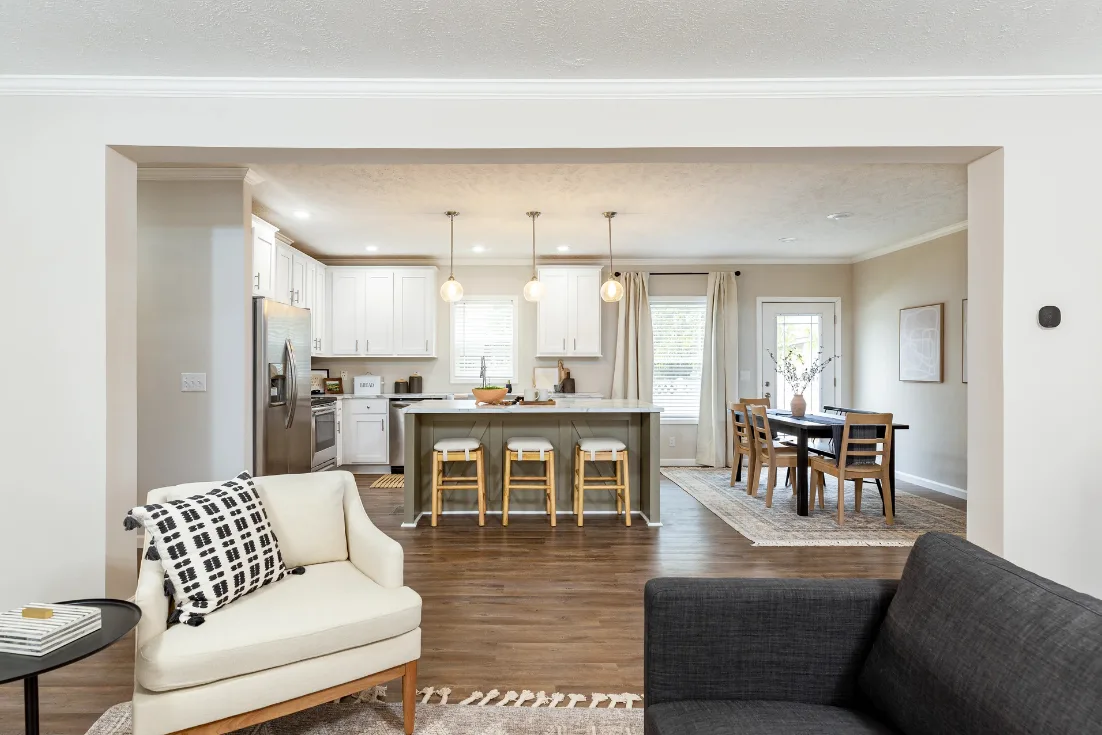
A view of a kitchen from the living room of a Clayton CrossMod home with cream walls, white cabinets, a large sage green kitchen island with seating in the center and a dining table set on the right.

Step 2: Tour a home and ask about location 

Once you find homes that interest you, the next step is seeing them in person. Touring allows you to understand how the space actually feels and to visualize yourself actually living there. Take note of details like natural light, storage, room sizes, and how well the layout would support your daily routine. 

While touring, you’ll typically have the chance to talk with someone knowledgeable about the home, like an agent or home consultant. Their role is to explain details about the home and help answer your questions. They can also provide context around pricing, timelines, and any additional considerations for buying or building in that area or neighborhood. 

This is a good time to ask practical, forward-looking questions, like: 

  • What features are included in the base home? 

  • Which options or upgrades are available, and when are those choices made? 

  • What does the typical timeline look like from here? 

It’s okay to visit more than once. It’s also okay to compare different builders or neighborhoods. Touring homes is all about finding the right fit, not rushing a decision.  

Location and timelines 

This is also when you’ll begin narrowing down your home’s location and purchase timeline. 

  • Planning to live in a move-in ready home or neighborhood site-built home? Meet with a home consultant who can walk you through available homes, expected timelines, and key details. If the home is complete, you may be able to tour it right away. If it’s under construction, they can provide an estimated completion date and next steps.

  • Planning to build on private land you already own or intend to purchase? Visit a Clayton location that specializes in modern manufactured homes for private land. A home consultant can help confirm whether your property is suitable for the chosen home and explain any site preparation requirements. If you’re still searching for land, they may also assist you in finding property zoned for your preferred floor plan. 

As you look at potential locations, consider how close you want to be to schools, work, and local amenities. You don’t need to finalize every detail yet, but narrowing down the general area will help inform timelines, costs, and your next steps. 

After touring a Clayton location or neighborhood, you’ll have more concrete information to guide your decision and plan your home purchase. Details like available homes, pricing, land considerations, estimated timelines, and additional costs will help you move forward with confidence and fill in the remaining gaps in your home buying plan. 

Step 3: Determine your financing path 

After visiting your local home center or neighborhood location, you should have a clearer picture of your preferred home and any additional costs to factor into your budget. Now it’s time to focus on how you’ll finance your purchase. 

At this stage, you’ll want a solid understanding of your overall budget, the monthly payment range you’re comfortable with, and how financing impacts your timeline. Exploring mortgage options and speaking with a lender of your choosing can help you better understand what you can afford and how to move forward with confidence. 

Financing your home 

Financing often plays a central role in the home buying process. It impacts what you can purchase, how quickly you’re ready to buy, and which types of homes make sense for your budget and long term financial goals. 

This step is about understanding your loan options, comparing lenders, and choosing a path that fits your needs. In general, we can think of this step in two parts:  

Part 1: Exploring loan options 

A lender can help you determine how much you may qualify to borrow and which loan types best fit your situation. You can compare rates online and submit basic information electronically, with follow-up by email, phone, or in person if a local office is available. 

Shopping with more than one lender also gives you flexibility. You can seek approval from more than one and ultimately choose the lender you feel most comfortable working with. 

Learn more about how to select a lender of your choice with these helpful articles:  

Types of home loans: Finding the mortgage option that fits your goals

How to choose a home loan lender: A step-by-step guide

Details that you want to look for and compare online: 

  • Advertised interest rates you could qualify for 

  • Available financial incentives or special offers 

  • Down payment requirements 

  • Loan terms and associated fees 

This step in the process can feel overwhelming. Move at a pace that feels right for you. Continue learning about mortgage types and terminology and write down questions to ask each lender. A qualified lender should be able to explain your options clearly and connect you with a knowledgeable representative who can walk through details in person, by phone, or through email. 

As you explore your options, a lender may recommend getting prequalified or preapproved. While similar, they serve different purposes: 

  • Prequalification gives you an early estimate of how much you may be able to borrow, based on basic financial information you share with a lender. (Note that the information you provide is still unverified at this stage.)

  • Preapproval goes a step further. The lender reviews verified documentation to confirm your income, assets, and credit history and calculate a more accurate range for your borrowing capacity. 

Both steps can bring clarity to your budget and strengthen your position as a buyer. You can complete them with multiple lenders with no obligation to choose any particular one.  

Once you have your prequalification or preapproval information, we recommend that you share it with your home consultant. This can help refine your home options and prepare you for the next milestone – signing a purchase agreement and submitting earnest money to your builder. 

Part 2: Complete a full loan application 

Once you’ve chosen a lender and selected a specific home, you’ll be ready to complete a full loan application. This usually involves submitting documentation to your lender, such as proof of income, bank statements, tax returns, and government-issued identification. 

During this stage, it’s common for lenders to request additional documents or ask follow-up questions for clarity about your expenses. These requests are a normal part of the review process and help keep your application review moving forward. 

Your lender will likely advise you to avoid making significant financial changes while your loan is being processed—such as changing jobs, opening new credit accounts, or making large purchases—since these actions could affect your approval. 

A close-up of two a book with a decorative metal knot sculpture and two glass vases sit on top of a white dresser below two small framed illustrations.

Step 4: Secure home insurance and prepare for closing costs 

Before officially closing on your home, you’ll need homeowners insurance. Most lenders require proof of active coverage before finalizing your loan and scheduling your closing.  

You can shop online for home insurance providers and request multiple quotes to compare coverage options and pricing.  

An insurance professional can help you choose a homeowners insurance policy that meets lender requirements while protecting your home and belongings. As you compare options, consider asking: 

  • When should coverage begin? 

  • What does the policy need to include? 

  • How will the insurance premium affect my monthly payment? 

You may choose to work with a provider you already know – many auto insurance companies offer homeowners coverage and potential bundle discounts when you add multiple types of coverage. Whether you stay with a current provider or explore new options, the goal is to find coverage that meets your needs at a competitive price that works for you. 

Closing costs 

As you prepare for closing, you’ll also need to budget for closing costs. These are the fees associated with finalizing your home purchase, including lender and title-related expenses. Ask your lender for a detailed estimate of your total home buying costs early in the process so you can review the numbers ahead of time and avoid surprises. 

Common closing costs may include: 

  • Lender fees related to processing and finalizing the loan 

  • Title services and recording fees 

  • Prepaid expenses, like property taxes or homeowners insurance 

  • Appraisal or inspection-related fees, when required 

  • Site preparation costs for placing a modern manufactured homes on land, if applicable 

Not every cost applies to every buyer. Your lender and home consultant can help explain which expenses apply in your situation and how they fit into the overall timeline. 

Step 5: Final walkthrough and closing on your home 

Closing is the final step in your mortgage financing journey. It’s when you sign the remaining paperwork, finalize your loan, and officially complete the purchase of your home. Depending on your lender and location, closing may take place in person or electronically using secure digital signatures. 

Final walkthrough 

Before closing, you’ll typically have the opportunity to complete a final walkthrough or inspection with your home consultant, real estate agent, or builder representative. This is your chance to confirm agreed-upon items have been completed, ensure the home is in expected condition, and ask any remaining questions before signing.  

Take your time and make sure everything feels right before moving forward. 

At closing 

During the closing, you’ll review and sign documents related to your loan and home purchase. A lender or closing agent will guide you through each document and explain what you’re signing. Again, take your time. It’s okay to pause and ask questions along the way. 

Once all documents are signed and funds are disbursed, ownership transfers to you. The home is officially yours! 

What happens next depends on the type of home you’re buying: 

If the home is site-built or move-in ready: you’ll typically receive your keys at closing and can begin moving in.  

If the home is a modern manufactured home being placed on land: 

  • You’ll usually close on the home first, with delivery and installation scheduled afterward. Once setup is complete, you’ll complete a final walkthrough and receive your keys on your scheduled move-in day.
     

  • Delivery and setup may include confirming that the homesite is ready, including grading, foundation or support systems, utility connections, and site access for delivery. These steps help ensure the home can be safely delivered and properly installed.
     

  • Your home consultant can help confirm timelines and explain what to expect as you move from closing to delivery, setup, and move-in. 

A family of four stands in their driveway at sunset and faces their home with a gray garage door, a front porch, blue siding, and a white front door.

Step 6: Welcome home! 

Congratulations! After you’ve successfully closed and the home is ready for move-in, it’s time to begin making the space your own. Take a breath and a moment to celebrate then get ready to start your next chapter. 

As a new homeowner, there are a few important next steps to complete.  

This may include: 

  • Setting up utilities and services, if not already in place 

  • Updating your address with the post office, employers, schools, and for key documents, like your driver’s license or ID 

  • Reviewing important home and warranty documents 

  • Learning the basics of home maintenance and care 

You may also want to locate and label key shutoffs (such as water, electrical, HVAC) and create a simple calendar to stay on top of routine maintenance. If questions come up after move-in, support doesn’t stop at closing. Your Clayton home consultants and customer support resources remain available to help as you settle in, so you can focus on enjoying your new home. 

Welcome to the family. 

There is a unique pride and sense of accomplishment in becoming a new homeowner. This is the start of your next chapter and a fresh start for your future. Read more about other happy Clayton homeowner stories and read helpful homeowner articles for home maintenance tips and more. Welcome home, you did it! 

This content is provided for educational purposes only and is not intended as financial, credit, or lending advice. Clayton Homes does not offer or originate mortgage loans and does not make credit decisions. Financing terms, loan programs, rates, and eligibility requirements vary by lender and may depend on buyer qualifications, property type, and location. Buyers should consult a licensed lender of their choice for information regarding available financing options.

FAQs
View all buying process FAQs
  • No. Many buyers start by touring homes first to understand what’s available and what feels like a good fit. Connecting with a lender often comes next, once you’re ready to talk through financing options and get a clearer picture of your budget. 

    That said, some buyers choose to speak with a lender earlier for a better understanding of their budget and buying power. Both approaches are common, and you can decide what feels right for you.

  • The home buying process can take a few weeks or up to six months or longer depending on what you need. Timelines vary based on the status of the home (meaning, whether the home is already built), the construction process, the need for land, financing steps, and any customization options. 

     As a general guide: 

    • Move-in ready homes: If the home you choose is already built and ready for purchase, all you need to do is finalize purchase paperwork with your home consultant, secure financing with a lender of your choice, purchase homeowners insurance, and complete closing. For a well-prepared buyer, this is the quickest path to homeownership. Shop move-in ready homes

    • Modern manufactured and CrossMod® homes: Typically these homes are built in about 9 to 12 weeks, with added time needed for any customizations, the purchase of land, site preparation, delivery, and closing. Talk to your home consultant about the timeline that most likely applies to homes you’re most interested in. Shop floor plans

    • Site-built homes: Construction can take six months or longer, with total timelines varying by location and design. Many builders have multiple available layouts for sale in varying stages of construction, so ask about available homes that could be completed sooner.  Find a builder near me 

    CrossMod® is a registered trademark of the Manufactured Housing Institute. 

Woman sits inside a new construction home and looking over her finances.

Learn more about home financing and estimating the cost of homeownership.

Finance articlesFinance FAQs